Friday, November 2, 2018

Space Travel Still Sucks


Even back when "Cracked.com" was all the rage with their irreverent lists, I wasn't always a fan of basic "Internet Top 10" lists. However, once in awhile -- and when my space blog was the hot new thing in the fledgling "Spacetweep" community -- something grabbed me that was worth commentary.

One particular article has remained on my mind through the years, and if you missed it, click graphic to read the:

6 Reasons Space Travel Will Always Suck

They weren't wrong. Space travel sucks. Space travel has always sucked. No matter what Elon Musk tries to spin, space travel will indeed continue to suck. Amazingly, most people still say they want to experience it... but upon speaking to them, it's clear that's because even people who truly support space agencies don't always know what it takes to survive off-Earth, and how sick you can become without the comforting gravity in which you evolved.

The saddest-but-truest statement starts out the article with a big bang: "We love movies about space, but are continually bored by actual space travel."
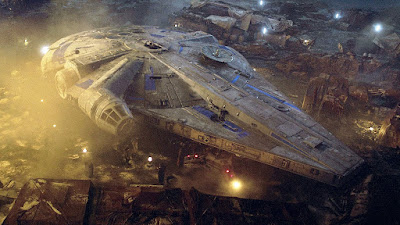
This is not what space travel will look like. Ever.
Yeah, we wish.

They drive home the point that even for far-off future generations, space travel may not meet our expectations, because...
6. There is No Sex in Space
5. It'll Be More Like a Submarine Than Star Trek
4. Life in Zero-Gravity is Horrible
3. There's Nothing to See
2. Getting Anywhere Interesting Means Never Going Home
1. In Space, On-Star Won't Do Shit For You


I read the entire article, desperately hoping I could disagree with it. Nope. They nailed it on every count.
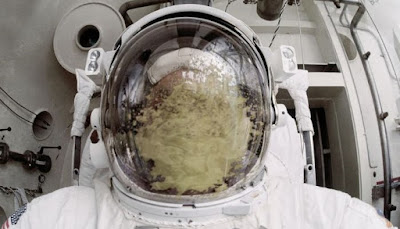
Space Travel Will Make You Sick
Spacebarf: actually the least of your worries.

There is no way to reproduce, so we aren't going anywhere as a group. Cramped quarters, not a cruise ship. Weightlessness messes with your head, your balance, your blood, your muscles (including your heart) and your bones. I know all this first-hand from my spaceflight simulations, which I performed for Johnson Space Center between 2008-2010. At one point while adjusting to micro-gravity, even the fillings in my teeth hurt.

All that just to travel through 99.99% of blackness – perhaps to reach something that will be the last thing you ever see. That's if you make it at all, considering the massive dangers… because you're dead if even the slightest thing goes wrong.

Guys like Bas Lansdorp, Dennis Tito, Richard Branson, Jeff Bezos, Peter Diamandis, and especially Elon Musk just make me roll my eyes. It's all well and good to be rich and visionary about hardware, but they are selling a fantasy.  

I would give anything if even just one of them repeated my spaceflight simulations so that they actually understood what space flight can do to the human body.

They talk like we are leaving for Mars in a year or ten. We aren't. 

Space Travel Isn't All It's CRACKED Up To Be
Hey, suppose we go to all that trouble... and THIS
is the only thing on the other end of the journey?

Key concept: "Your life depends on your time aboard the starship being skull-crushingly boring."

So apparently, that's the funny part. The unfunny part? Underneath all the hyperbole, the message is clear: We all want the "future" of space travel to get here, but few truly understand the reality of what it takes to get us there. We have to go through many, many downers before we get to the payoff.

Why is all of this on my mind? Once upon a time, I put my body and brain on the line for science. As an astronaut analog, I spent more time in contraptions simulating micro-gravity than most astronauts have spent in actual orbit. The longest any astronauts spent on the Moon was on the Apollo 17 mission, where Gene Cernan and Jack Schmitt were on the lunar surface for 4 days. My lunar study hardware put me in 6% gravity for 7 days. 

I have a 10-year bone density DEXA scan coming up. I'll see if there were any lasting effects from my participation in the study of how leaving Earth gravity affects humans long term.


Wednesday, August 29, 2018

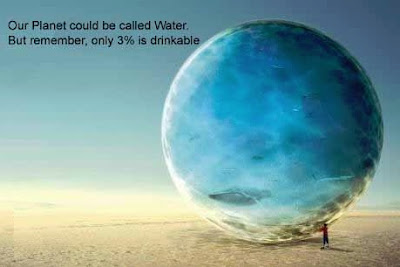
Is "Earth" Truly the Right Name For a Ball of Liquid Blue?


In random ponderings, I have always thought "Earth" was an odd name. The crust of our planet is about 70% ocean, and only 30% above-water landmass that is habitable to We The Species who think it's our job to go about naming things.

We decided our planet should be descriptive instead of being named after a god, so wouldn't it make more sense if we were named for WATER?

Figuring my spacey questions might be a welcome breather between Trump rants and film remake freak-outs, I posed this question to a blog forum I infrequently lurk. This particular philosophical discussion yielded thought-provoking responses.
 
Planet  Water

ETYMOLOGY  / Language History: Greek era , Old German erda

Indo-European roots akin to Crimean Goth airtha, old Saxon ertha, Olde English eorthe, Middle English erthe

Greek hydor or hudor, Latin unda wave, Old English wæter; akin to Old High German wazzar


The Greek word for water now survives as the prefix hydro- (as in words like hydrogen or hydration). But with the widespread "borrowing" of languages, perhaps we might even be Wazer or Wave? Had humans known more about planetary properties during the time of naming, we might be something entirely different.


If we changed our planet name, what would be more descriptive?

Yourfindit: If we rename the whole planet, then all the Aliens will have to go through a long process of correcting and updating their records.

Legbamel: Mess?

LolitaV: I always though the name should start with Sector; like Sector Z8474895-AJ1248_X.

Aningenious: I'd go with Skaron 6 it's quite cool and any aliens would have to be mad to attempt to invade a planet called Skaron 6.

Nothingprofound: It's always fascinated me that we're the one planet NOT named after a Latin deity.

Exit2013: It doesn't matter... sooner or later this planet will be a waterworld. Seriously.

PetLvr: We have friends that named their chihuahua "Paul" because they heard someone on a TV show make fun of people who name their pet dogs human names... we can do that for the planet Earth. I vote for "Planet Melvin."

Planet Earth


Theresa111: Globe ? Earth's fine by me, kinda used to it. I have given the name some thought throughout my existence and figured someone simply named it before being privy to the rest of the planets elements.

Sam1982: Who had the naming rights anyway?

kdawg68: We should probably ask the insects what they think, since they do outnumber us vastly. Or, we could just go with "Insectia."

Animemania: If we held a poll to change the planet's name...that would be just awful. We'd be stuck calling Earth "Planet Stupid" or something.

crazyTsu: But mud is everywhere (well in most places), not only here. What's in a name? we name things according to what we are familiar with. Our familiarity has not evolved so much and I aint no marine creature either so no oceanworld for me.

Flamingpoodle: The 71/29 split only applies to the earth's surface. Besides, we call it earth because we live on the eartherns part.


Well, if we're going to split hairs, it's actually 70.78% to 29.22% -- but who's counting? ;) I originally rounded because the point of the exercise was "early colloquial assumptions versus current knowledge." If we really wanted a descriptive name, we’d have to include core material, and we aren't about to call our planet "Giant Ball of Mostly Molten Silicon and Iron."

Wednesday, May 30, 2018

Dumb Or Overly Forced Astronomical Acronyms (DOOFAAS)


Working for the Harvard-Smithsonian Center for Astrophysics is such a serious and mind-engaging affair, you might think it would render you unable to find time for aimless whimsy in your life. You'd be wrong.

Space DOOFAAS


I found this bloke at the HSCA who appears to have time on his hands. This Canadian-Hawaiian Astronomer and Computer Engineer who is also a hockey player (SRSLY) compiled an entertaining list of Dumb Or Overly Forced Astronomical Acronyms (DOOFAAS) and you're missing something truly special if you don't go check it out!

I sampled a select few that tickled mah humerus:

01. ARMPIT... ASKAP Rotation Measure & Polarisation InvestigaTion
02. BICEP... Background Imaging of Cosmic Extragalactic Polarization
03. BLISS... Background-Limited Infrared-Submillimeter Spectrograph
04. CHIPS... Cosmic Hot Interstellar Plasma Spectrometer
05. COYOTES... Coordinated Observations of Young ObjecTs from Earthbound Sites
06. DONUT... Direct Observation of NU Tau
07. DUPLEX... DUst-Prominent Longitudinally-EXtended
08. EGG... Evaporating Gaseous Globule
09. EGRET... Energetic Gamma Ray Experiment Telescope
10. FIFI... Far Infrared Fabry-perot Interferometer
11. FOXES... Fluctuating Optical & X-ray Emitting Sources
12. GENIUS... GErmanium liquid NItrogen Underground Setup
13. HIS/HERS... High Intensity Spectrograph / High Energy Range Spectrometer
14. HO-BAGS... Hubble Observatory BAckground Galaxy Survey
15. JIVE... Joint Institute for VLBI in Europe
16. KISS... KPNO International Spectroscopic Survey
17. LACE... Low power Atmospheric Compensation Experiment
18. MACHO... MAssive Compact Halo Objects
19. MARTINI... Multi-Aperture Real Time Image NormalIzation system
20. NOT... Nordic Optical Telescope
21. OGLE... Optical Gravitational Lensing Experiment
22. OWL... Overwhelmingly Large Telescope
23. PRESTO... Project to Re-Engineer Space Telescope Observing
24. QUEST... Q & U Extra-galactic Sub-mm Telescope
25. RATTS... Run Away T-Tauri Stars
26. SAURON... Spectroscopic Areal Unit for Research on Optical Nebulae
27. SEQUOIA... SEcond QUabbin Optical Imaging Array
28. THUMPER... Two HUndred Micron PhotometER
29. WOMBAT... Wavelength-Oriented Microwave Background Analysis Team
30. YORIC... Yet another Optimal Resolution Image Constructor (Alas...)

Acronyms - Harvard Collection

It gets better (or worse, depending on how you look at it); other fun DOOFAAS include Boomerangs, Castles, Flamingoes, Squids, Polar Bears, Aztecs, Spartans. Our esteemed List Master declares "TANGOinPARIS" the overall WINNER… and I am inclined to agree.

He invites all who visit to "Mail me yours today!" and I'm quite confident my tasteful and intelligent readers have stores of these on hand. So please check out the full list and send Mr. P the DOOFAAS your particular working environment cherishes.

Tuesday, May 1, 2018

The Future of NASA


With an unpredictable president, and an non-scientific NASA administrator now stunningly and inexplicably confirmed, many space enthusiasts and especially those in the aerospace industry are reasonably wondering, what will the future hold?

What's to come in the new presidential administration

In years past, I have spent Decembers on space calendar giveaways, top missions of the year, and various awards, then created a post in January to discuss space goals, agency changes, and what the new year might bring. I simply had no idea how to continue that trend in 2017 and 2018. It's like we are all through the portal to the Upside-Down!

When I comment on how unconventional things suddenly became over the past year, a few Twitter users have accused me of "zeroing in" on Trump in a way that I "never did with Obama." Not true. I meticulously documented Obama's campaign promises for many years -- as evidenced by my past posts where I literally listed EVERY SINGLE ONE of President Barack Obama's space-related policies.

I just as meticulously documented results, and was never shy about listing his promises and researching them exhaustively, nor did I ever  fail to mention when promises were stalled, compromised upon, or downright broken.

Obameter of Space promises

For the first time since I've begun writing about the nation's civil space policy, the administration itself changed into something so unexpected. Any change in command at the highest level could well mean significant changes to many portions of the space agency, not the least of which is a new leader for the agency itself.

The short list originally included GW Space Policy Institute Director Scott Pace, former astronaut Colonel Eileen Collins, and Oklahoma Representative Jim Bridenstine -- author of the(highly suspect) Space Renaissance Act. That the latter of the list and the very least of the candidates is now installed in an industry he groks only scantly, is jaw-dropping in the extreme. We can only surmise his appointment was based on meager understanding of what his job should actually be, and he shows little sign of being anything but a disaster in an already over-burdened bureaucracy.

Top priorities, as always, are listed as Moon, Mars, and Commercial Space. However, these tended to be the "sexy spotlights," when in fact NASA's $18-$20 billion is spread broadly among many major categories that contribute to successful industries both in space and across the globe.


Here are the major categories of the NASA budget. What will a Trump presidency mean to things like climate change research, Earth sciences, Green efforts, or even planetary science? We know many of these categories have been in the "pork" list for conservatives for many cycles. Will a budget for Moon or Mars glory mean gutting the long term plans for the habitability for our own planet? Such a turn of events seems unlikely.

We can likely count on many Senators in the 10 states with major NASA centers to fight for the jobs inside their borders, and the crucial work that fuels technology and spinoffs from space research; what we do not know is how well they will fare against blatantly partisan attempts to cater to myths that science is untrustworthy, or that science cares about elections, imaginary lines on maps, or whether Floridians just voted to imagine climate change does not exist when sea life is flooding into Miami parking garages.


For the moment, we only have sparse commentary from Donald Trump, and none so far show that he has a grasp of the actual issues facing the space agency. His mere mention of a "Space Force" violates the longstanding Treaty on Principles Governing the Activities of States in the Exploration and Use of Outer Space, Including the Moon and Other Celestial Bodies (United Nations, 1967).

So far most of the details have come from more knowledgeable policy advisers, and not Trump himself. Based on his own comments, comparing the promises of Trump to Obama is a stark contrast, indeed.

I won't try to predict what the future holds, I'll just hope the message from the first man in space holds true into the 21st century.